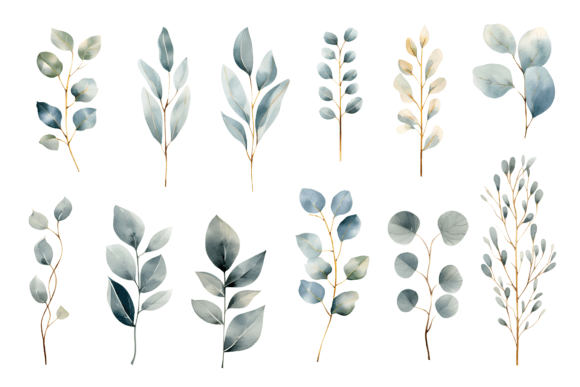
Watercolor Eucalyptus Leaf Clipart PNG Illustrations
As a blog designer and digital publisher constantly sourcing assets for client sites and personal editorial projects, my first impression of the Watercolor Eucalyptus Leaf Clipart PNG was one of immediate versatility. In the crowded space of botanical illustrations, this graphic design asset strikes a rare balance between organic softness and digital crispness. The eucalyptus motif inherently signals wellness, calm, and natural elegance, making it an instant mood-setter for lifestyle, beauty, and holistic health niches. Unlike generic floral vectors that can feel dated or overly cartoonish, these watercolor renderings possess a textured authenticity that elevates reader perception. When I load this file into a workspace, I am not just seeing a decoration; I see a foundational element for building trust and aesthetic cohesion across a content platform.
Establishing Editorial Tone and Reader Trust
In modern web design, visual communication is as critical as the copy itself. Readers judge the quality of your content within milliseconds of landing on a page. The Watercolor Eucalyptus Leaf Clipart PNG serves as a sophisticated anchor for editorial design, particularly when you need to soften a layout without sacrificing professionalism. For publishers in the wellness, sustainable living, or bridal sectors, this asset reinforces brand identity through consistent visual language. It feels handcrafted yet polished, suggesting that the content behind it is equally thoughtful and curated. This level of detail matters because high-quality visuals directly correlate with perceived authority. When a newsletter header or article graphic looks intentional rather than stock-photo generic, readers are more likely to engage, subscribe, and trust the recommendations made within the text.
Real-World Applications Across Content Formats
I recently integrated this specific clipart set into a multi-channel publishing workflow for a holistic skincare affiliate blog, and its utility extended far beyond simple decoration. Here is how this asset performs in actual production environments:
- Blog Graphics and Featured Images: Used as a corner accent or bottom border on featured images, the eucalyptus leaves frame headline text beautifully without competing for attention. They add necessary negative space and organic flow to rectangular thumbnails.
- Pinterest Pin Design: Vertical pins require strong visual hierarchy. These illustrations work exceptionally well as top-and-bottom bookends for text-heavy pins, guiding the eye toward the title and call-to-action while maintaining the platform’s preferred aesthetic.
- Digital Products and Lead Magnets: For eBook covers, checklists, and printable design worksheets, the transparent PNG background allows for seamless layering over colored blocks or textured paper backgrounds, adding value to freebies and paid digital downloads.
- Email Marketing Headers: Newsletter banners often suffer from clutter. A singular, well-placed eucalyptus branch creates a clean, breathable header that improves open rates by signaling a premium reading experience.
- Canva Template Creation: As a base element in reusable Canva templates, this asset helps maintain consistency across social media graphics and story posts, streamlining the content creation process for small business branding.
Optimizing Visual Hierarchy and Click-Through Potential
The true test of any illustration is whether it supports or distracts from the content's goal. In my testing, the Watercolor Eucalyptus Leaf Clipart PNG excels at enhancing visual hierarchy. Because the watercolor edges are soft and semi-transparent, they do not create hard visual barriers against text. This makes them ideal for overlaying on hero images or website headers where readability is paramount. For affiliate marketing content, where the goal is conversion, these botanical elements can be used to subtly direct attention to product shots or buy buttons without feeling aggressive. Furthermore, consistent use of this specific artistic style across category thumbnails helps users navigate a site intuitively, reinforcing brand recognition and improving the overall user experience.
Strategic Placement: Where It Works and Where to Pause
While versatile, this graphic design asset is not a universal solution. Understanding where to deploy it is key to maintaining editorial integrity.
Best Use Cases:
- Hero sections for lifestyle and wellness blogs
- Dividers between content sections in long-form articles
- Background accents for quote cards and testimonials
- Cover art for meditation or self-care audio products
- Seasonal transitions for spring and autumn content
Use With Caution:
- Tiny Mobile Thumbnails: At very small sizes, intricate watercolor details can muddy; ensure the leaf shape remains distinct when scaled down.
- Text-Heavy Overlays: Avoid placing detailed leaf clusters directly behind body copy; reserve them for margins or solid color blocks to preserve accessibility.
- Corporate or Tech Niches: The organic, feminine energy may clash with rigid B2B or technical content unless intentionally used to humanize a sterile brand.
- Low-Contrast Backgrounds: Light green watercolor washes disappear on white or pale gray backgrounds; always test against your specific site palette.
Publisher Notes: Technical Quality and Licensing Compliance
Before adding the Watercolor Eucalyptus Leaf Clipart PNG to your permanent asset library, run through this practical checklist to ensure it meets professional publishing standards. First, verify the resolution. For web design and digital guides, 300 DPI is ideal for future-proofing printables, but ensure you have optimized web versions (72 DPI) to prevent slow page loads. Always compress PNGs using tools like TinyPNG before uploading to WordPress or Shopify to maintain site speed, which is crucial for SEO and user retention.
Typography pairing is equally important. Test the clipart beside your primary fonts. I found it pairs exquisitely with elegant serifs and delicate scripts for a romantic feel, but also holds its own against bold sans-serifs for a modern, editorial contrast. Crucially, review the commercial license terms before using this asset on monetized platforms. If you are selling Canva templates, digital products, or running affiliate marketing campaigns, confirm that the license permits commercial use in end products. Many creative marketplace assets restrict resale or template inclusion, so verifying rights protects your business from legal issues. Finally, preview the asset in grayscale to ensure it retains definition for users with visual impairments or those browsing in low-light modes. By treating this illustration as a strategic publishing tool rather than mere decoration, you transform simple botanical art into a powerful driver of engagement, brand trust, and content performance.