Baby Woodland Animal Watercolor Clipart Review
As a designer who bridges the gap between digital illustration and tangible textile art, I approach every new asset pack with a specific question: will this actually translate to thread? When evaluating the Baby Woodland Animal Watercolor Clipart collection, my perspective shifts from purely aesthetic appreciation to technical feasibility. For embroidery designers, Etsy sellers, and makers creating personalized gifts, the charm of watercolor lies in its softness, but that same softness presents unique challenges when converting pixels to stitches. This review examines these illustrations not just as digital files, but as potential components for custom apparel, nursery decor, and commercial embroidery projects.
Translating Soft Aesthetics to Stitch Logic
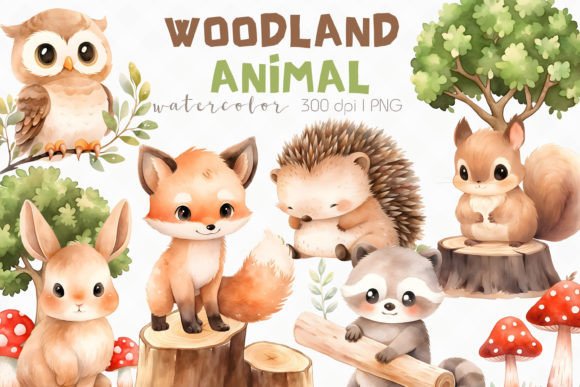
The immediate appeal of this Baby Woodland Animal Watercolor Clipart set is its gentle, organic mood. The edges are undefined, the colors bleed naturally, and the expressions are universally endearing. However, an embroidery machine does not understand "soft edges" without specific digitizing instructions. When I look at these illustrations, I am mentally mapping out stitch types. The watercolor washes suggest complex fill stitches or perhaps a printed fabric background with embroidered outlines, rather than attempting to replicate the paint texture entirely with thread.
For a handmade product like a baby onesie or a linen tea towel, trying to force high-density satin stitches to mimic watercolor gradients often results in a stiff, bulletproof design that detracts from the fabric's drape. Instead, these assets shine when treated as applique designs or mixed-media projects. The visual personality of these woodland creatures suggests they belong on natural fibers—cotton, linen, and bamboo—where the slight texture of the fabric complements the artistic style. If you are planning sweatshirt embroidery or tote bag designs, consider how the clipart’s muted palette will interact with heathered fabrics versus solid colors. The design assets here evoke nostalgia and warmth, making them ideal for holiday embroidery or boutique branding, provided the digitizing respects the delicate nature of the original art.
Real-World Application: The Custom Nursery Pillow Project
To truly test the viability of this Baby Woodland Animal Watercolor Clipart, I recently approached a commission for a personalized nursery pillow. The client wanted a fox and deer motif that felt vintage yet modern. Using digital clipart directly for embroidery requires careful editing. In this real-life scenario, I could not simply load a raster image and auto-digitize; the result would have been a chaotic mess of jump stitches and uneven density.
Instead, I used the clipart as a precise template. I imported the illustration into my embroidery software and created a running stitch outline to define the animal's shape, preserving the whimsical silhouette. For the interior, rather than dense fill stitches, I opted for a lighter tatami fill with increased spacing to allow the linen pillow cover to show through, mimicking the transparency of watercolor. The result was a breathable, soft-to-the-touch embroidered patch effect that maintained the integrity of the original artwork. This approach highlights a crucial lesson for small shop product development: the clipart serves best as a stylistic guide for manual digitizing or professional conversion, ensuring the finished product retains the artisanal quality customers expect from a craft business.
Navigating Fabric Constraints and Hoop Limitations
While the Baby Woodland Animal Watercolor Clipart is versatile, it demands respect for material limitations. Watercolor-style illustrations often feature fine details and tapered extremities that can be problematic on certain textiles. When working with stretchy knits for baby clothes or custom apparel, the lack of defined borders in the source art can lead to registration issues if the stabilizer is insufficient. I strongly advise against using these designs on highly textured terry cloth or plush fabrics unless you use a topping; the intricate details meant to convey fur or feathers will simply sink into the pile and disappear.
Hoop size is another critical factor. These illustrations often have horizontal or vertical orientations that may not fit standard 4x4 hoops without significant resizing. Resizing watercolor art downward can cause small elements, like eyes or leaf veins, to turn into indistinguishable blobs of thread. Conversely, scaling up too much without adding stitch data leads to sparse coverage. For cap embroidery or curved surfaces, the flat perspective of these clipart files may distort. Always test on scrap fabric first. If you are an Etsy seller offering digital embroidery files derived from this art, clearly state the minimum recommended size and fabric type to prevent customer frustration. Dark fabrics also pose a challenge; watercolor relies on light passing through layers. On navy or black garments, you must digitize a white underlay base, which changes the hand-feel and visual weight of the design significantly.
Commercial Viability and Brand Consistency
For creative entrepreneurs and apparel decorators, consistency is currency. The Baby Woodland Animal Watercolor Clipart collection offers a cohesive theme that helps build brand recognition across diverse products. Whether you are selling printable mockups, physical tea towels, or personalized gifts, maintaining the same visual language builds trust. However, commercial embroidery requires durability. Watercolor aesthetics can sometimes look "unfinished" if not executed with precision. Ensure your stitch density is balanced; too loose looks amateur, too dense ruins the garment.
When listing items in your online shop, use the original clipart to create accurate digital previews, but always include photos of actual stitched samples. Customers need to see how the translation from screen to thread affects the final look. This transparency reduces returns and increases buyer engagement. Furthermore, verify your licensing. Just because you own the clipart does not automatically grant rights to sell mass-produced embroidered merchandise or redistribute the digitized files. Clarifying these terms protects your business and ensures ethical use of design assets.
Essential Technical Notes for Makers
Before committing this Baby Woodland Animal Watercolor Clipart to a production run or a cherished gift, adhere to these practical guidelines:
- Test Stitchouts Are Mandatory: Never assume a digital preview equals a physical reality. Run a test on the exact fabric and stabilizer combination you intend to use for the final project.
- Evaluate Thread Color Contrast: Watercolor palettes are often low-contrast. Check your thread colors against the fabric in natural lighting to ensure the design remains legible after stitching.
- Review Stabilizer Choices: For lightweight baby items, use a tear-away or wash-away stabilizer to avoid scratchy residues. For tote bags or denim, a cut-away provides necessary support for detailed fills.
- Inspect Small Details: Zoom in on the digitized file. Elements smaller than 2mm may need to be simplified or removed to prevent needle breaks and thread bunching.
- Mockup vs. Reality: Use the clipart for beautiful social media marketing and listing images, but manage expectations by explaining that embroidery has a different texture and sheen than digital print.
- Licensing Verification: Confirm whether your purchase includes commercial rights for finished embroidered products versus digital file resale. This distinction is vital for Etsy sellers and small business owners.
Ultimately, the Baby Woodland Animal Watercolor Clipart is a beautiful foundation for embroidery projects, provided it is treated with technical intention. It bridges the gap between digital artistry and traditional craft, offering immense potential for those willing to navigate the nuances of stitch translation. By understanding the interplay between the soft aesthetic of the illustration and the structural demands of machine embroidery, you can create heirloom-quality items that resonate deeply with clients and customers alike.